

Japanese Conversation · Level 71
75 words
Search Japanese words as written, in romaji or by English meaning.
Dictionaries
Quick links
Browse
 MotiSpiOfficial conversation app

Japanese word
Romajinenpai
この席は年配の方にお譲りします。ko no seki wa nen pai no hō ni o yuzu ri shi ma su
I will give this seat to an older person.
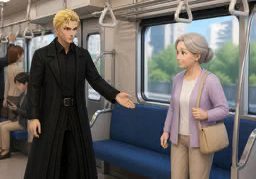
この講座は年配の方にも分かりやすい内容です。ko no kō za wa nen pai no hō ni mo wa ka ri ya su i nai yō de su
This course is easy for older people to understand.
It describes someone as relatively advanced in age while leaving the exact age unspecified.
年配の方nen pai no hō
older person
年配の人nen pai no hito
older person
高齢者kōreisha: A person who is relatively advanced in age, often in formal or public language.
年長者nenchōsha: A person who is older than others in a particular group or setting.
老人rōjin: An older person described in direct terms that can sound less polite.
年寄りtoshiyori: An older person referred to in familiar or informal speech.
比較的年齢が高い人。hi kaku teki nen rei ga taka i hito
The Sino-Japanese compound 年配 (nenpai) combines 年 (nen, "year or age") and 配 (hai, "distribution or proportion"), giving a term for a person's relative age.