

JLPT · Level 42
60 words
Search Japanese words as written, in romaji or by English meaning.
Dictionaries
Quick links
Browse
 MotiSpiOfficial conversation app

Japanese word
Romajisurechigau
二人は駅ですれ違います。futa ri wa eki de su re chiga i ma su
The two people pass each other at the station.
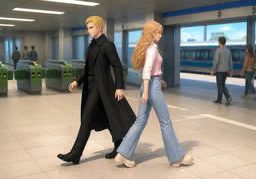
狭い廊下で、先生とすれ違いました。sema i rō ka de sen sei to su re chiga i ma shi ta
I passed my teacher in the narrow hallway.
Describes people or things approaching one another, passing at close range, and then moving on apart.
人とすれ違うhito to su re chiga u
pass someone
行き違うikichigau: To pass someone without meeting because each person takes a different route.
通り過ぎるtōrisugiru: To move past a person or place without stopping or changing direction.
人や物が近い位置で互いの横を通り過ぎ、同じ場所にとどまらない。hito ya mono ga chika i i chi de taga i no yoko o tō ri su gi ona ji ba sho ni to do ma ra na i
すれ違う (surechigau) is a native compound of すれ (sure), the continuative form of すれる (sureru, "to rub"), and 違う (chigau, "to differ").