

Japanese Conversation · Level 108
60 words
Search Japanese words as written, in romaji or by English meaning.
Dictionaries
Quick links
Browse
 MotiSpiOfficial conversation app

Japanese word
Romajitōrisugiru
自転車が私の横を通り過ぎます。ji ten sha ga watashi no yoko o tō ri su gi ma su
A bicycle goes past me.
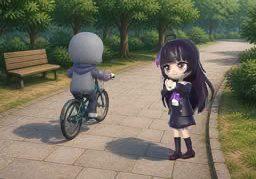
話に夢中で、降りる駅を通り過ぎてしまいました。hanashi ni mu chū de o ri ru eki o tō ri su gi te shi ma i ma shi ta
I was absorbed in the conversation and went past my stop.
Presents movement that continues past a person, place, or object rather than ending beside it.
人の前を通り過ぎるhito no mae o tō ri su gi ru
pass in front of someone
交差点を通り過ぎるkō sa ten o tō ri su gi ru
go past an intersection
通過するtsūkasuru: To move past a place, point, or person along a route.
過ぎるsugiru: To move past a place or person, or go beyond a set point.
通り抜けるtōrinukeru: To pass through a space or place and emerge on the other side.
人や物が、目印となる場所や物の横を越えて向こうへ進む。hito ya mono ga me jirushi to na ru ba sho ya mono no yoko o ko e te mu kō e susu mu
通り過ぎる (tōrisugiru) is formed from 通り (tōri), the continuative form of 通る (tōru, "to pass through"), and 過ぎる (sugiru, "to pass beyond").