

HSK · Level 4
132 words
Search Chinese words by characters, pinyin or English meaning.
Dictionaries
Quick links
Browse
 MotiSpiOfficial conversation app

Chinese word
Pinyindòng
别动,让我看看伤口。bié dòng ràng wǒ kàn kàn shāng kǒu
Don't move; let me look at the wound.
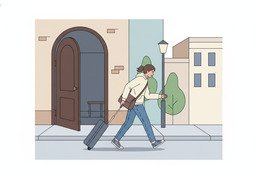
他试着把门动了一下。tā shì zhe bǎ mén dòng le yí xià
He tried moving the door a little.
A force or contact makes a person or thing shift position, change state, or begin an action.
别动了bié dòng le
stop moving
动一下dòng yí xià
move a little
去qù: To depart from one place and travel to another.
来lái: To move in the direction of the speaker.
走zǒu: To travel between places on foot.
(人或物)从原来的位置或状态发生位移或变化,也可指用力使其发生这种变化或开始进行某种动作。rén huò wù cóng yuán lái de wèi zhì huò zhuàng tài fā shēng wèi yí huò biàn huà yě kě zhǐ yòng lì shǐ qí fā shēng zhè zhǒng biàn huà huò kāi shǐ jìn xíng móu zhǒng dòng zuò
The simplified form 动 (dòng, "move") comes from traditional 動 (dòng, "move"), whose 重 (zhòng, "heavy") + 力 (lì, "force") components connect applied force with movement.