

TOPIK · Level 254
15 words
Search Korean words by Hangul, romanization or English meaning.
Dictionaries
Quick links
Browse
 MotiSpiOfficial conversation app

Korean word
Romanizationyujeok
그 지역에는 오래된 유적이 많이 남아 있다.keu chi yeo ge neun o rae doen yu jeo gi ma ni na ma it tta
Many old ruins remain in the area.
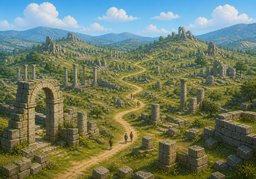
시에서는 오래된 유적의 보존 작업을 시작했다.si e seo neun o rae doen yu jeo gui po jon cha geo beul si ja kaet tta
The city started work to preserve old ruins.
A surviving trace of past human activity, seen in old buildings, structures, or their remains.
문화 유적mun hwa yu jeok
cultural heritage sites
유적 보존yu jeok po jon
ruins preservation
유물yumul: An old object preserved from the past, often found through excavation.
사적sajeok: A historic place officially designated and protected as cultural heritage.
유적지yujeokjji: A place where ruins remain and can be visited or studied.
터teo: Ground where a building or facility once stood.
과거에 사람이 살거나 활동하던 자리에서 남아 있는 건물이나 구조물, 또는 그 자취kwa geo e sa ra mi sal geo na hwal dong ha deon cha ri e seo na ma in neun keon mu ri na ku jo mul tto neun keu cha chwi
This Sino-Korean word combines the ideas of something left behind and a trace, fitting remains from earlier human activity.