

Japanese Conversation · Level 24
90 words
Search Japanese words as written, in romaji or by English meaning.
Dictionaries
Quick links
Browse
 MotiSpiOfficial conversation app

Japanese word
Romajinigasu
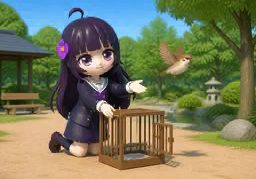
捕まえた鳥を逃がしました。tsuka ma e ta tori o ni ga shi ma shi ta
I let the bird I caught escape.
釣った魚は、写真を撮ってから逃がします。tsu tta sakana wa sha shin o to tte ka ra ni ga shi ma su
I take a picture of the fish I caught and then release it.
Changes someone or something from being held to being free by allowing it to escape.
鳥を逃がすtori o ni ga su
let a bird escape
魚を逃がすsakana o ni ga su
release a fish
犯人を逃がすhan nin o ni ga su
let the suspect escape
放すhanasu: To stop holding a person, animal, or thing and let it move freely.
解放するkaihōsuru: To release a person or animal from confinement, control, or restraint.
逃すnogasu: To fail to keep someone or something from getting away, or to miss an opportunity.
捕らえていた人や動物などを自由にして、逃げるままにすること。to ra e te i ta hito ya dō butsu na do o ji yū ni shi te ni ge ru ma ma ni su ru ko to
逃がす (nigasu, "to let escape") is a native causative formation based on 逃ぐ (nigu, "to flee"); its final element す (su, "to cause") marks the act of making another flee.