

Japanese Conversation · Level 88
60 words
Search Japanese words as written, in romaji or by English meaning.
Dictionaries
Quick links
Browse
 MotiSpiOfficial conversation app

Japanese word
Romajikōzoku
前の車が止まると、後続も止まりました。mae no kuruma ga to ma ru to kō zoku mo to ma ri ma shi ta
When the car ahead stopped, the following car stopped too.
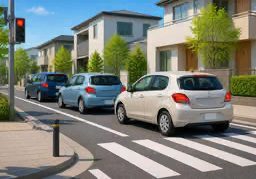
高速道路では、後続車を確認してから車線を変更します。kō soku dō ro de wa kō zoku kuruma o kaku nin shi te ka ra sha sen o hen kō shi ma su
On the highway, I change lanes after checking the cars behind me.
後続 (kōzoku) describes a person or thing that continues behind another, with the focus on its place in a sequence.
後続車kō zoku kuruma
following car
先に進む人や物のあとに続く人や物。saki ni susu mu hito ya mono no a to ni tsuzu ku hito ya mono
The noun 後続 (kōzoku) is formed from 後 (kō, "behind") and 続 (zoku, "continue"), describing something that continues behind what came first.