

Japanese Conversation · Level 109
60 words
Search Japanese words as written, in romaji or by English meaning.
Dictionaries
Quick links
Browse
 MotiSpiOfficial conversation app

Japanese word
Romajiheikō
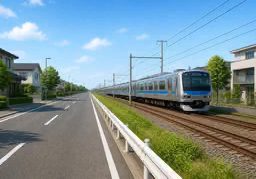
道路と線路は平行です。dō ro to sen ro wa hei kō de su
The road and the railway are parallel.
この二本の線は平行です。ko no ni pon no sen wa hei kō de su
These two lines are parallel.
定規を使って、二本の線を平行に引きます。jō gi o tsuka tte ni pon no sen o hei kō ni hi ki ma su
Using a ruler, I draw two parallel lines.
Describes things that proceed alongside one another in the same direction while remaining separate.
平行な直線hei kō na choku sen
parallel straight lines
平行な平面hei kō na hei men
parallel planes
平行に線を引くhei kō ni sen o hi ku
draw parallel lines
並行heikō: Describes separate tasks or processes that proceed side by side at the same time.
二つ以上の直線や物事が、同じ方向に並び、どこまで延ばしても交わらない状態にある。futa tsu i jō no choku sen ya mono goto ga ona ji hō kō ni nara bi do ko ma de no ba shi te mo maji wa ra na i jō tai ni a ru
平行 (heikō) is a Sino-Japanese compound of 平 (hei, "even") and 行 (kō, "go"), expressing movement in the same direction.