

Japanese Conversation · Level 60
75 words
Search Japanese words as written, in romaji or by English meaning.
Dictionaries
Quick links
Browse
 MotiSpiOfficial conversation app

Japanese word
Romajidaikirai
私は野菜が大嫌いな子どもです。watashi wa ya sai ga dai kira i na ko do mo de su
I am a child who hates vegetables.
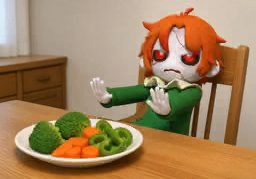
弟はピーマンが大嫌いで、いつも残します。otōto wa pī ma n ga dai kira i de i tsu mo noko shi ma su
My younger brother hates green peppers and always leaves them.
Expresses a very strong feeling of dislike toward a person, thing, or activity.
大嫌いな野菜dai kira i na ya sai
a vegetable I hate
大嫌いな相手dai kira i na ai te
a person I hate
嫌いkirai: Expresses dislike toward a person, thing, or activity.
苦手nigate: Describes a person, thing, or activity that someone finds difficult or does not handle well.
嫌iya: Describes something unwanted, unpleasant, or emotionally unwelcome.
人や物事を非常に強く嫌う気持ちを表す語。hito ya mono goto o hi jō ni tsuyo ku kira u ki mo chi o arawa su go
Combines 大 (dai, "great") with 嫌い (kirai, "dislike"), so the compound intensifies the meaning of 嫌い.