

Japanese Conversation · Level 38
90 words
Search Japanese words as written, in romaji or by English meaning.
Dictionaries
Quick links
Browse
 MotiSpiOfficial conversation app

Japanese word
Romajimukō
川の向こうに町があります。kawa no mu kō ni machi ga a ri ma su
There is a town on the other side of the river.
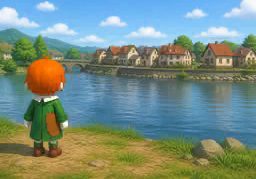
橋を渡ると、向こうに公園が見えます。hashi o wata ru to mu kō ni kō en ga mi e ma su
When you cross the bridge, you can see a park on the other side.
Marks a place on the far side from the speaker or from a stated reference point.
川の向こうkawa no mu kō
the other side of the river
向こうにmu kō ni
on the other side
向こうからmu kō ka ra
from the other side
向こう側mukōgawa: A place on the far side from the speaker or a stated reference point.
反対側hantaigawa: The side that is opposite a stated place, object, or person.
向かいmukai: A place directly across from a person or location, often separated by a road or space.
話し手や基準となる場所から見て、隔てるものの反対側にある場所。hana shi te ya ki jun to na ru ba sho ka ra mi te heda te ru mo no no han tai gawa ni a ru ba sho
向こう (mukō) is a native Japanese noun related to 向く (muku, "to face"), linking the idea of facing with the far side.