

Japanese Conversation · Level 76
76 words
Search Japanese words as written, in romaji or by English meaning.
Dictionaries
Quick links
Browse
 MotiSpiOfficial conversation app

Japanese word
Romajimukōgawa
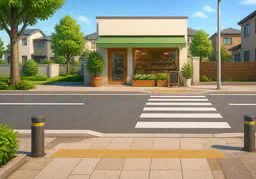
道の向こう側に小さな店があります。michi no mu kō gawa ni chii sa na mise ga a ri ma su
There is a small shop on the other side of the street.
向こう側から犬の鳴き声が聞こえます。mu kō gawa ka ra inu no na ki goe ga ki ko e ma su
I can hear a dog barking from the other side.
Presents a place, position, or group as lying across from or beyond the point used for comparison.
向こう側にあるmu kō gawa ni a ru
be on the other side
向こう側へ渡るmu kō gawa e wata ru
cross to the other side
向こう側から来るmu kō gawa ka ra ku ru
come from the other side
反対側hantaigawa: The side or position on the other side of a stated point.
向かい側mukaigawa: The side or position situated face to face with a stated place.
向こうmukō: A place, position, or group on the far side of a point used for reference.
話し手や基準点の反対方向にある場所や立場。hana shi te ya ki jun ten no han tai hō kō ni a ru ba sho ya tachi ba
The compound 向こう側 (mukōgawa) joins 向こう (mukō, "the far side") with 側 (gawa, "side"); 側 is read gawa here because of voicing in the compound.