

JLPT · Level 21
75 words
Search Japanese words as written, in romaji or by English meaning.
Dictionaries
Quick links
Browse
 MotiSpiOfficial conversation app

Japanese word
Romajiinishie
私は古に思いをはせます。watashi wa inishie ni omo i o ha se ma su
I think of ancient times.
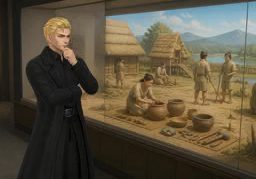
博物館で古の人々の暮らしを学びます。haku butsu kan de inishie no hito bito no ku ra shi o mana bi ma su
I learn about the lives of people in ancient times at a museum.
Presents the distant past as a separate era that lies well before the present.
古をしのぶinishie o shi no bu
reminisce about ancient times
いにしえinishie: A distant past described in historical or literary language.
昔mukashi: A time that has already passed, including a person's earlier days.
今から遠く離れた昔の時代。ima ka ra tō ku hana re ta mukashi no ji dai
古 (inishie, "ancient times") is a native Japanese word whose original formation is uncertain; the kanji 古 (ko, "old") is used for its meaning.