

Japanese Conversation · Level 16
90 words
Search Japanese words as written, in romaji or by English meaning.
Dictionaries
Quick links
Browse
 MotiSpiOfficial conversation app

Japanese word
Romajide
この店は料理の出が早いです。ko no mise wa ryō ri no de ga haya i de su
The food comes out quickly at this restaurant.
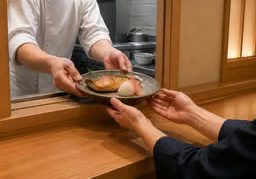
料理の出を早めるため、注文をまとめて伝えます。ryō ri no de o haya me ru ta me chū mon o ma to me te tsuta e ma su
To get the food served faster, we place all our orders at once.
The noun describes a transition from inside or behind a source to an outward position where something can be seen or encountered.
出が早いde ga haya i
quick service
出が遅いde ga oso i
slow service
提供teikyō: The act of making food or a service available to a customer.
配膳haizen: The act of placing prepared food and dishes on a table for people to eat.
内や奥にあるものが外に現れること。人の外出、日の出、料理の提供などにいう。uchi ya oku ni a ru mo no ga soto ni arawa re ru ko to hito no gai shutsu hi no de ryō ri no tei kyō na do ni i u
出 (de, "coming out") comes from 出る (deru, "to come out") by using the verb form that can function as a noun, while keeping the basic idea of movement from inside to outside.