


English–Japanese
“widow” in Japanese
Japanese
Pronunciation
Romajimibōjin
Example
彼女は夫を亡くして未亡人になりました。kano jo wa otto o na ku shi te mi bō jin ni na ri ma shi ta
She became a widow after her husband died.
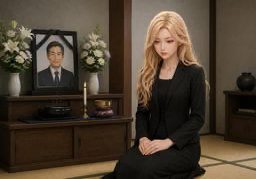
How to say “widow” in Japanese
“Widow” in Japanese is 未亡人 (mibōjin).
Refers to a woman whose husband has died and who remains unmarried, emphasizing her status after his death.
Example sentences with 未亡人
彼女は未亡人として二人の子どもを育てています。kano jo wa mi bō jin to shi te futa ri no ko do mo o soda te te i ma su
She is raising two children as a widow.
Tips for using 未亡人
- In modern Japanese, 未亡人 (mibōjin) is formal or literary, so everyday speech often uses a descriptive phrase such as 夫を亡くした女性 (otto o nakushita josei).