


English–Japanese
“elderly person” in Japanese
Japanese
Pronunciation
Romajikōreisha
Example
その高齢者は毎朝散歩します。so no kō rei sha wa mai asa san po shi ma su
That elderly person takes a walk every morning.
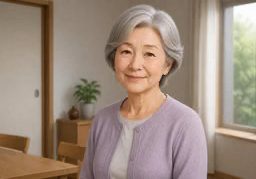
How to say “elderly person” in Japanese
“Elderly person” in Japanese is 高齢者 (kōreisha).
It refers to someone whose age places them among the older members of a population, without specifying their health or abilities.
Example sentences with 高齢者
この地域では、高齢者の一人暮らしが増えています。ko no chi iki de wa kō rei sha no hito ri gu ra shi ga fu e te i ma su
In this area, the number of elderly people living alone is increasing.
Tips for using 高齢者
- In statistics and social policy, 高齢者 (kōreisha) often functions as a broad age-based category rather than a description of one person's physical condition.