

German Conversation · Level 43
73 words
Search German words by spelling or English meaning.
Dictionaries
Quick links
Browse
 MotiSpiOfficial conversation app

German word
IPA/anˈtiːk/
Die antike Statue stammt aus dem fünften Jahrhundert.
The ancient statue dates back to the fifth century.
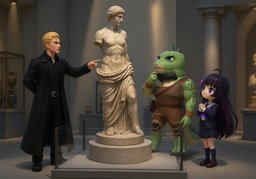
Forscher studieren antike Texte, um historische Sprachen zu verstehen.
Researchers study ancient texts to understand historical languages.
A classical Greek or Roman object or style recognized as belonging to a distant historical age.
antike Texte
ancient texts
antike Bauwerke
ancient structures
antike Mythologie
ancient mythology
alt: Dating from long ago and having considerable age.
historisch: Connected with a past period, event, or civilization of historical importance.
klassisch: Regarded as an enduring model of excellence in art, style, or thought.
veraltet: No longer used or accepted because it belongs to an earlier era.
aus der Zeit der Antike stammend oder sich auf diese Zeit beziehend, besonders auf die klassische griechisch-römische Kultur
The German adjective antik is a borrowing from French antique, which developed from Latin antiquus.