

German Conversation · Level 21
89 words
Search German words by spelling or English meaning.
Dictionaries
Quick links
Browse
 MotiSpiOfficial conversation app

German word
IPA/loːkomoˈtiːvə/
Die Lokomotive zieht den Zug.
The locomotive is pulling the train.
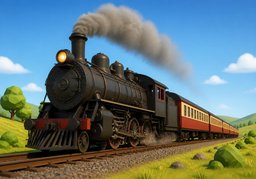
Im Museum steht eine Lokomotive aus dem 19. Jahrhundert.
A 19th-century locomotive stands in the museum.
A self-powered rail vehicle pulls or pushes the unpowered cars that make up a train.
moderne Lokomotive
modern locomotive
die Lokomotive des Zuges
the locomotive belonging to the train
Lok: A common colloquial short form for a locomotive.
E-Lok: A locomotive powered by electricity from overhead wires or another external supply.
Dampflok: A locomotive powered by steam produced in a boiler.
Diesellok: A locomotive powered by a diesel engine.
Ein Fahrzeug auf Schienen, das durch Dampf, Elektrizität oder Diesel eigene Triebkraft erzeugt und Wagen zieht oder schiebt.
German Lokomotive entered through French locomotive and ultimately relates to Latin locus, meaning 'place', and movere, meaning 'to move'.