

German Conversation · Level 66
75 words
Search German words by spelling or English meaning.
Dictionaries
Quick links
Browse
 MotiSpiOfficial conversation app

German word
IPA/lɔk/
Die Loks fahren jeden Morgen pünktlich.
The locomotives depart on time every morning.
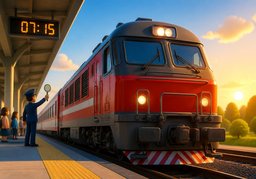
Der Techniker prüft die Lok vor der Abfahrt.
The technician checks the locomotive before departure.
A powerful rail machine at the front of a train, pulling or pushing the other cars.
Dampflok
steam locomotive
Elektrolok
electric locomotive
auf der Lok
on the locomotive
Lokomotive: A formal term for a powered rail vehicle that pulls or pushes train cars.
Zug: A connected set of passenger or freight cars traveling together on rails.
E-Lok: A locomotive powered by electricity and used to pull or push train cars.
Diesellok: A locomotive powered by a diesel engine and used to pull or push train cars.
Umgangssprachliche Kurzform von Lokomotive; eine Maschine, die Wagen eines Zuges zieht oder schiebt.
Lok is a colloquial shortening of German Lokomotive, a borrowing ultimately related to Latin locus, "place," and movere, "to move."