

HSK · Level 81
45 words
Search Chinese words by characters, pinyin or English meaning.
Dictionaries
Quick links
Browse
 MotiSpiOfficial conversation app

Chinese word
Pinyintuó
牧民把草驮上山了。mù mín bǎ cǎo tuó shàng shān le
The herders carry the grass up the mountain.
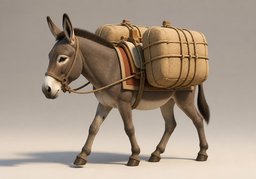
那只骆驼仍然驮着沉重的布包向前走。nà zhǐ luò tuó réng rán tuó zhe chén zhòng de bù bāo xiàng qián zǒu
That camel keeps walking forward while carrying a heavy cloth bundle.
A load rides on an animal's back as the animal carries it from place to place.
骆驼驮着货物luò tuó tuó zhe huò wù
a camel carrying goods
把草驮上山bǎ cǎo tuó shàng shān
carry grass up the mountain
驴子驮着行李lǘ zi tuó zhe xíng lǐ
a donkey carrying luggage
背bèi: Carry a load on a person's or animal's back.
扛káng: Lift and carry something on the shoulder or with the hands.
载zài: Carry people or goods in a vehicle or boat.
搬bān: Move an object from one place to another, usually by hand.
把东西放在牲畜或背具上运送。bǎ dōng xī fàng zài shēng chù huò bèi jù shàng yùn sòng
驮 (tuó, "carry on an animal") is the simplified form of 馱 (tuó, "carry on an animal"), whose 马 (mǎ, "horse") component points to an animal and whose 大 (dà, "big") component supplies the sound.