

HSK · Level 87
45 words
Search Chinese words by characters, pinyin or English meaning.
Dictionaries
Quick links
Browse
 MotiSpiOfficial conversation app

Chinese word
Pinyinméng fā
他的兴趣在大学里萌发了。tā de xìng qù zài dà xué lǐ méng fā le
His interest developed at university.
在讨论中,新的问题在他心中萌发了。zài tǎo lùn zhōng xīn de wèn tí zài tā xīn zhōng méng fā le
During the discussion, a new question arose in his mind.
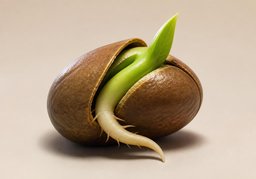
A new idea, interest, or trend starts as a small inner bud and slowly pushes into view.
萌发 求知欲méng fā qiú zhī yù
develop a thirst for knowledge
萌发 敌意méng fā dí yì
develop hostility
萌发 反感méng fā fán gǎn
develop an aversion
产生chǎn shēng: A new feeling, idea, or condition comes into existence.
出现chū xiàn: Something previously absent appears or comes into view.
开始kāi shǐ: An action or condition starts for the first time.
形成xíng chéng: Separate parts join together and become an organized whole.
指新的想法、兴趣或趋势从内在开始产生并初步显现,像植物的芽儿从内部冒出而逐渐发展成形。zhǐ xīn de xiáng fǎ xìng qù huò qū shì cóng nèi zài kāi shǐ chǎn shēng bìng chū bù xiǎn xiàn xiàng zhí wù de yár cóng nèi bù mào chū ér zhú jiàn fā zhǎn chéng xíng
萌 (méng, "sprout") + 发 (fā, "send out") forms a compound for something new beginning inside and emerging.