

Chinese Conversation · Level 10
90 words
Search Chinese words by characters, pinyin or English meaning.
Dictionaries
Quick links
Browse
 MotiSpiOfficial conversation app

Chinese word
Pinyinhòu mén
你可以从后门进来。nǐ ké yǐ cóng hòu mén jìn lái
You can come in through the back door.
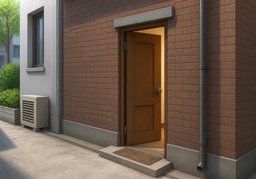
出门时记得把后门锁上。chū mén shí jì de bǎ hòu mén suǒ shàng
Remember to lock the back door when you leave.
A tucked-away entrance serves as a model for access that avoids the main, visible route, whether the route is part of a building or a system.
锁好后门suó hǎo hòu mén
lock the back door
打开后门dǎ kāi hòu mén
open the back door
院子里的后门yuàn zi lǐ de hòu mén
the back door in the yard
正门zhèng mén: The main door at the front of a building or grounds.
入口rù kǒu: A place or passage used to enter a building or area.
门口mén kǒu: The area by a door or entrance, where people enter and leave.
侧门cè mén: A smaller door on the side of a building.
指建筑物背后或侧面不显眼的门,也常用来比喻秘密的、通过关系或不公开途径获得的渠道或方法。zhǐ jiàn zhù wù bèi hòu huò cè miàn bù xián yǎn de mén yě cháng yòng lái bǐ yù mì mì de tōng guò guān xì huò bù gōng kāi tú jìng huò dé de qú dào huò fāng fǎ
The parts 后 (hòu, "behind") and 门 (mén, "door") describe a back entrance, which provides the image for access arranged away from the usual open route.