

HSK · Level 32
135 words
Search Chinese words by characters, pinyin or English meaning.
Dictionaries
Quick links
Browse
 MotiSpiOfficial conversation app

Chinese word
Pinyinchū tǔ
这个墓穴里出土了很多文物。zhè ge mù xué lǐ chū tǔ le hěn duō wén wù
Many cultural relics were unearthed in this tomb.
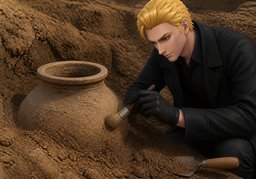
修桥时,在河床的砂层中出土了一件完整的陶片。xiū qiáo shí zài hé chuáng de shā céng zhōng chū tǔ le yí jiàn wán zhěng de táo piàn
During bridge repairs, a complete pottery shard was unearthed in a layer of sand on the riverbed.
A buried artifact passes from the soil into view through archaeological digging.
出土文物chū tǔ wén wù
unearthed cultural relics
出土于chū tǔ yú
be unearthed in
出土器物chū tǔ qì wù
unearthed artifacts
发掘fā jué: To excavate a site systematically to uncover artifacts or information.
挖掘wā jué: To dig into soil to take out something buried, often during building or archaeological work.
发现fā xiàn: To find a previously unknown object or fact through investigation or by chance.
表示文物、陶器、骨器等在考古挖掘中从地下出现或被发现的动作或状态。biǎo shì wén wù táo qì gǔ qì děng zài káo gǔ wā jué zhōng cóng dì xià chū xiàn huò bèi fā xiàn de dòng zuò huò zhuàng tài
出土 (chūtǔ, "come out of the earth") combines 出 (chū, "come out") + 土 (tǔ, "earth"), creating a direct image of something emerging from the ground.