

HSK · Level 55
105 words
Search Chinese words by characters, pinyin or English meaning.
Dictionaries
Quick links
Browse
 MotiSpiOfficial conversation app

Chinese word
Pinyinyǐ
他累了,就在门边倚着休息。tā lèi le jiù zài mén biān yǐ zhe xiū xī
He is tired, so he rests, leaning beside the door.
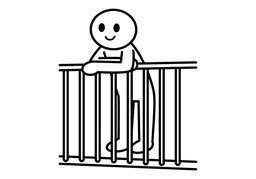
登山后,他在大石旁倚着休息。dēng shān hòu tā zài dà shí páng yǐ zhe xiū xī
After climbing the mountain, he rested, leaning against a large rock.
Part of the body rests against something solid while that object carries some of its weight.
倚墙yǐ qiáng
lean against a wall
倚栏杆yǐ lán gān
lean against a railing
靠kào: To lean against something or use it as support for the body or another object.
倚靠yǐ kào: To lean the body against another object so that object bears part of its weight.
依靠yī kào: To get help by depending on another person, a thing, or a useful method.
依赖yī lài: To rely on someone or something continually rather than deal with matters independently.
把身体的一部分依靠在别的物体上以减轻体重或短暂休息,侧重物理上的寄靠动作。bǎ shēn tǐ de yí bù fèn yī kào zài bié de wù tǐ shàng yǐ jiǎn qīng tǐ zhòng huò duǎn zàn xiū xī cè zhòng wù lǐ shàng de jì kào dòng zuò
倚 (yǐ, "to lean") is formed from 亻 (rén, "person") + 奇 (qí, "phonetic element"), with the first component marking a human-related action and the second supplying the sound.