

Chinese Conversation · Level 52
90 words
Search Chinese words by characters, pinyin or English meaning.
Dictionaries
Quick links
Browse
 MotiSpiOfficial conversation app

Chinese word
Pinyinshàng pù
我睡在上铺。wǒ shuì zài shàng pù
I sleep in the top bunk.
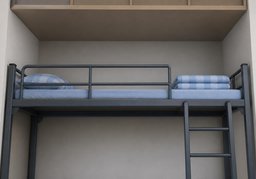
我妹妹刚换到上铺,很高兴。wǒ mèi mèi gāng huàn dào shàng pù hěn gāo xìng
My younger sister just moved to the top bunk and is very happy.
A bed positioned on the upper level of a stacked sleeping space, such as a bunk bed or a sleeper berth.
换到上铺huàn dào shàng pù
move to the top bunk
上铺和下铺shàng pù hé xià pù
top bunk and bottom bunk
睡在上铺shuì zài shàng pù
sleep in the top bunk
下铺xià pù: The lower sleeping place in a bunk bed or sleeper berth.
双层床shuāng céng chuáng: A two-level bed with one sleeping place above the other.
床铺chuáng pù: The bed or bedding used for sleeping.
指宿舍、车厢或家中双层床等处位于上层的床位。zhǐ sù shè chē xiāng huò jiā zhōng shuāng céng chuáng děng chù wèi yú shàng céng de chuáng wèi
上铺 (shàngpù, "top bunk") combines 上 (shàng, "up") with 铺 (pù, "bed or berth"), so the first character places the sleeping space above another one.