


English–Chinese
“vague” in Chinese
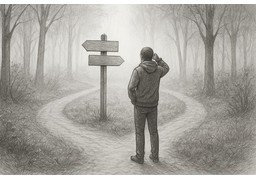
How to say “vague” in Chinese
“Vague” in Chinese is 模糊 (mó hú).
An outline or idea loses its sharp edges, so details and boundaries merge instead of standing apart.
Example sentences with 模糊
照片上的人像有点模糊,看不清五官。zhào piān shàng de rén xiàng yóu diǎn mó hú kàn bù qīng wǔ guān
The person in the photo is slightly blurred, so I can't see their facial features clearly.
Tips for using 模糊
- In conversation, the noun after this adjective often shows whether the lack of clarity concerns visual focus, a statement, a memory, or a boundary.
Other Chinese words for “vague”
他的回答很含糊,我不懂。tā de huí dá hěn hán hú wǒ bù dǒng
His answer is vague, and I do not understand.

记忆中那件事变得越来越朦胧。jì yì zhōng nà jiàn shì biàn de yuè lái yuè méng lóng
That event in my memory became increasingly vague.