

TOPIK · Level 134
15 words
Search Korean words by Hangul, romanization or English meaning.
Dictionaries
Quick links
Browse
 MotiSpiOfficial conversation app

Korean word
Romanizationkokkiri
동물원에서 코끼리를 봤어요.tong mu rwo ne seo ko kki ri reul pwa sseo yo
I saw an elephant at the zoo.
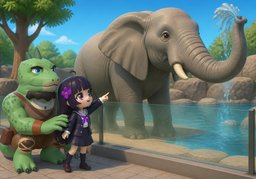
아이들이 코끼리 인형을 안고 놀고 있어요.a i deu ri ko kki ri in hyeong eul an kko nol go i sseo yo
The children are playing while holding elephant plush toys.
A very large plant-eating mammal that uses its long, flexible nose to pick things up and draw in water.
코끼리 무리ko kki ri mu ri
herd of elephants
코끼리 사진ko kki ri sa jin
elephant photograph
코끼리 인형ko kki ri in hyeong
elephant plush toy
기린kirin: A land animal with a very long neck that reaches leaves at the tops of trees.
코뿔소koppulso: A heavy plant-eating animal that has one or two strong horns above its nose.
하마hama: A water-loving plant-eating mammal with a broad body and a very wide mouth.
얼룩말eollungmal: A striped grass-eating animal that commonly travels and feeds with a group.
몸집이 크고 긴 코를 이용해 물건을 집거나 물을 빨아들이는 초식성 포유류.mom ji bi keu go kin ko reul i yong hae mul geo neul chip kkeo na mu reul ppa ra deu ri neun cho sik sseong po yu ryu
The word is a native Korean term, but its precise historical formation is uncertain, so it is best learned as a whole rather than split into parts.