

TOPIK · Level 278
16 words
Search Korean words by Hangul, romanization or English meaning.
Dictionaries
Quick links
Browse
 MotiSpiOfficial conversation app

Korean word
Romanizationchama
기자들은 그 질문에 차마 답하지 못했다.ki ja deu reun keu chil mu ne cha ma ta pa ji mo taet tta
The reporters could not bring themselves to answer that question.
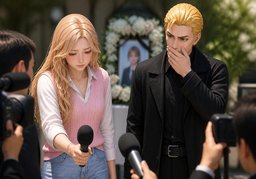
그 소식을 듣고도 그는 차마 입을 떼지 못했다.keu so si geul teut kko do keu neun cha ma i beul tte ji mo taet tta
Even after hearing the news, he could not bring himself to speak.
Shame or sympathy weighs on the heart so heavily that carrying out an action feels impossible.
차마 말할 수 없다cha ma mal hal ssu eop tta
cannot bring oneself to say
차마 입을 떼지 못하다cha ma i beul tte ji mo ta da
cannot bring oneself to speak
감히kamhi: Shows that fear or deference makes an action feel too bold to attempt.
도저히tojeohi: Says that no available effort or method can make something possible.
도무지tomuji: Adds strong emphasis to a negative statement meaning not at all.
결코kyeolko: Adds firm emphasis to a negative statement meaning never.
부끄러움이나 동정심 등으로 마음이 무거워 어떤 행위를 실행할 수 없음을 나타내는 문어적 성격의 부사.pu kkeu reo u mi na tong jeong sim teung eu ro ma eu mi mu geo wo eo tteon haeng wi reul sil haeng hal ssu eop sseu meul na ta nae neun mu neo jeok seong gyeo gui pu sa
This is a native Korean adverb, but its deeper historical origin is uncertain, so its present meaning is best learned as emotional restraint caused by shame or sympathy.