

Korean for Kids · Level 53
16 words
Search Korean words by Hangul, romanization or English meaning.
Dictionaries
Quick links
Browse
 MotiSpiOfficial conversation app

Korean word
Romanizationchittta
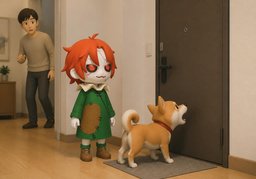
강아지가 문 앞에서 짖고 있어요.kang a ji ga mun a pe seo chit kko i sseo yo
The puppy is barking in front of the door.
산책 중에 갑자기 개가 앞에 있는 고양이에게 짖었다.san chaek chung e kap jja gi kae ga a pe in neun ko yang i e ge chi jeot tta
During a walk, the dog suddenly barked at the cat in front of it.
A dog makes short, repeated sounds to warn others or get attention.
낯선 사람에게 짖다nat sseon sa ra me ge chit tta
bark at a stranger
밤에 짖다pa me chit tta
bark at night
개들이 짖다kae deu ri chit tta
dogs bark
멍멍거리다meongmeonggeorida: A dog makes separate little woofing sounds again and again.
짖어대다chijeodaeda: A dog keeps letting out loud barks one after another for a while.
낑낑거리다kkingkkinggeorida: A dog makes soft, repeated whines when it feels afraid or hurt.
으르렁거리다eureureonggeorida: A dog makes a deep, rough sound to tell a nearby person or animal to stay away.
주로 개가 경계하거나 주의를 끌기 위해 짧고 반복적으로 소리를 내는 동작을 나타내는 동사chu ro kae ga kyeong gye ha geo na chu ui reul kkeul gi wi hae jjal kko pan bok jjeo geu ro so ri reul nae neun tong ja geul na ta nae neun tong sa
The exact historical origin of 짖다 (jittta, "bark") is uncertain, so it is best learned as a native Korean verb for a dog's warning or attention sounds.