

Korean Conversation · Level 287
15 words
Search Korean words by Hangul, romanization or English meaning.
Dictionaries
Quick links
Browse
 MotiSpiOfficial conversation app

Korean word
Romanizationchachaekada
실수했다고 자책하지 마.sil su haet tta go cha chae ka ji ma
Don't blame yourself for making a mistake.
실패 후에도 그는 자신을 자책했다.sil pae hu e do keu neun cha si neul cha chae kaet tta
Even after the failure, he blamed himself.
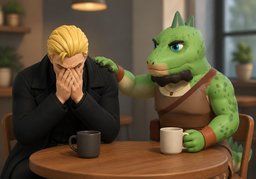
A person turns blame inward after a mistake and feels the emotional pain of it.
자신을 자책하다cha si neul cha chae ka da
blame oneself
계속 자책하다kye sok cha chae ka da
continually blame oneself
잘못을 자책하다chal mo seul cha chae ka da
blame oneself for a mistake
반성하다panseonghada: Look back at personal actions, recognize faults, and try to improve.
후회하다huhoehada: Feel regret about a past action or choice and wish it had been different.
죄책감을 느끼다choechaekkkameul neukkida: Feel that personal wrongdoing has created a heavy burden on the conscience.
자신의 잘못을 스스로 비난하거나 책망하여 마음 아파하는 동사cha si nui chal mo seul seu seu ro pi nan ha geo na chaeng mang ha yeo ma eum a pa ha neun tong sa
The word combines Sino-Korean elements meaning self and blame with a common verb-forming element, creating the idea of blaming oneself.