

Korean Conversation · Level 245
15 words
Search Korean words by Hangul, romanization or English meaning.
Dictionaries
Quick links
Browse
 MotiSpiOfficial conversation app

Korean word
Romanizationyuchihada
그의 행동은 유치해.keu ui haeng dong eun yu chi hae
His behavior is childish.
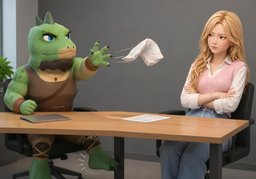
그 장식은 너무 유치해 보인다.keu chang si geun neo mu yu chi hae po in da
That decoration looks too childish.
Behavior or speech that seems immature, unserious, or somewhat tacky.
유치해 보이다yu chi hae po i da
look childish
유치한 표현yu chi han pyo hyeon
childish expression
유치한 장난yu chi han chang nan
childish prank
유치스럽다yuchiseureoptta: Giving an immature impression through a childish look or manner.
철없다cheoreoptta: Acting without the judgment or responsibility expected at one's age.
미성숙하다miseongsukada: Still developing and not fully mature in thought, feelings, or behavior.
말이나 행동이 성숙하지 못해 진지하게 받아들여지지 않거나 품위가 없어 보이는 상태ma ri na haeng dong i seong su ka ji mo tae chin ji ha ge pa da deu ryeo ji ji an keo na pu mwi ga eop sseo po i neun sang tae
The word is formed from the Sino-Korean noun 유치 (yuchi, "immaturity") and 하다 (hada, "to do or be"), giving it the sense of having an immature quality.