

TOPIK · Level 247
15 words
Search Korean words by Hangul, romanization or English meaning.
Dictionaries
Quick links
Browse
 MotiSpiOfficial conversation app

Korean word
Romanizationeoptta
엄마가 아기를 업었어요.eom ma ga a gi reul eo beo sseo yo
Mom carried the baby on her back.
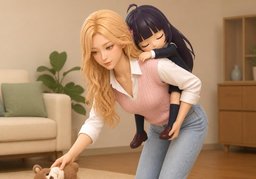
할아버지가 손녀를 업고 놀이터에 갔어요.ha ra beo ji ga son nyeo reul eop kko no ri teo e ka sseo yo
Grandfather carried his granddaughter on his back to the playground.
A person rests against the carrier's back while the carrier moves them.
아기를 업다a gi reul eop tta
carry a baby on one's back
아이를 업다a i reul eop tta
carry a child on one's back
등에 업다teung e eop tta
carry on one's back
메다meda: Carry a bag or load with its strap resting over the shoulder.
짊어지다chilmeojida: Bear a heavy load on the back or shoulders while moving.
안다anda: Hold a person close and support them with the arms.
태우다taeuda: Give a person a ride in a vehicle to a destination.
사람을 등에 올려서 이동시키는 동사로, 주로 어린아이를 대상으로 쓰인다.sa ra meul teung e ol lyeo seo i dong si ki neun tong sa ro chu ro eo ri na i reul tae sang eu ro sseu in da
This is a native Korean verb, not a loanword, whose basic meaning is carrying a person on the back.