

Korean Conversation · Level 210
15 words
Search Korean words by Hangul, romanization or English meaning.
Dictionaries
Quick links
Browse
 MotiSpiOfficial conversation app

Korean word
Romanizationeogyang
저는 억양을 바꿔서 말해 봤어요.cheo neun eo gyang eul pa kkwo seo mal hae pwa sseo yo
I tried speaking with a different intonation.
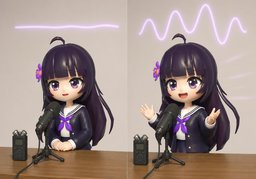
그 배우는 억양으로 감정을 잘 전달해요.keu pae u neun eo gyang eu ro kam jeong eul chal cheon dal hae yo
That actor conveys emotions well through intonation.
The pitch contour running across a whole utterance, carrying clues about attitude and sentence type.
억양을 고치다eo gyang eul ko chi da
correct one's intonation
억양이 자연스럽다eo gyang i cha yeon seu reop tta
natural intonation
억양을 연습하다eo gyang eul yeon seu pa da
practice one's intonation
톤ton: A speaker's vocal quality can suggest warmth, distance, or another conversational mood.
어투eotu: The way speech is phrased and shaped forms its characteristic verbal style.
말투maltu: A person's customary word choices and expressions form a noticeable speaking habit.
말할 때 문장 전체의 음성적 흐름으로 말투나 감정, 문장의 종류를 드러내는 소리의 높낮이 변화mal hal ttae mun jang cheon che ui eum seong jeok heu reu meu ro mal tu na kam jeong mun jang ui chong nyu reul teu reo nae neun so ri ui nom na ji pyeon hwa
The word comes from a Sino-Korean compound whose parts suggest lowering and raising, a useful picture of pitch moving through speech.