

Korean Conversation · Level 182
15 words
Search Korean words by Hangul, romanization or English meaning.
Dictionaries
Quick links
Browse
 MotiSpiOfficial conversation app

Korean word
Romanizationseupkki
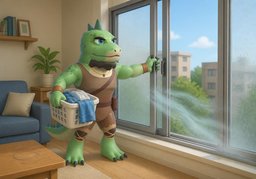
창문을 열어 습기를 빼자.chang mu neul yeo reo seup kki reul ppae ja
Let's open the window to let out the moisture.
샤워 후 욕실에 습기가 가득 차서 거울에 김이 섰어요.sya wo hu yok ssi re seup kki ga ka deuk cha seo keo u re ki mi seo sseo yo
After the shower, the bathroom filled with moisture, and the mirror fogged up.
Dampness that lingers in the air or clings to a surface, often making a room or object feel wet.
습기 제거seup kki che geo
moisture removal
습기를 빼다seup kki reul ppae da
remove moisture
습도seuptto: A percentage shows how much water vapor the air contains.
물기mulgi: A thin layer of water remains on a surface and can be wiped away.
축축함chukchukam: Slight wetness leaves fabric or ground feeling clammy.
눅눅함nungnukam: Dampness that lasts can leave things feeling clammy and smelling musty.
공기 중이나 물건 표면에 존재하는 수분을 가리키는 명사.kong gi chung i na mul geon pyo myeo ne chon jae ha neun su bu neul ka ri ki neun myeong sa
The Sino-Korean formation 습기 (seupkki, "moisture") joins 습 (seup, "dampness") with 기 (kki, "air"), creating a word for damp moisture present in air or on a surface.