

Korean Conversation · Level 112
15 words
Search Korean words by Hangul, romanization or English meaning.
Dictionaries
Quick links
Browse
 MotiSpiOfficial conversation app

Korean word
Romanizationsugida
손님이 감사하며 고개를 숙였다.son ni mi kam sa ha myeo ko gae reul su gyeot tta
The guest lowered his head in thanks.
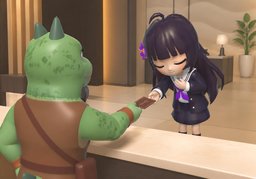
감동한 관객들이 무대 앞에서 고개를 숙였다.kam dong han kwan gaek tteu ri mu dae a pe seo ko gae reul su gyeot tta
Moved by the performance, the audience members lowered their heads in front of the stage.
A person lowers the head, sometimes with the upper body, to show respect, apology, or thanks.
고개를 숙이다ko gae reul su gi da
lower one's head
고개를 숙이다kogaereul sugida: Tilt the head forward to greet someone or express thanks or apology.
절하다cheolhada: Perform a formal bow by bending the body to show respect.
머리를 숙이다meorireul sugida: Lower the head briefly as a small respectful greeting.
고개나 몸을 낮추어 인사·사과·감사의 뜻을 나타내는 동사로, 주로 '고개를 숙이다' 형태로 쓰인다.ko gae na mo meul nat chu eo in sa sa gwa kam sa ui tteu seul na ta nae neun tong sa ro chu ro ko gae reul su gi da hyeong tae ro sseu in da
The exact origin of this verb is uncertain, but its meaning centers on lowering or bending down, which connects the physical action with a respectful gesture.