

Japanese Conversation · Level 81
60 words
Search Japanese words as written, in romaji or by English meaning.
Dictionaries
Quick links
Browse
 MotiSpiOfficial conversation app

Japanese word
Romajikōka
電車は高架を走っています。den sha wa kō ka o hashi tte i ma su
The train is running on the elevated track.
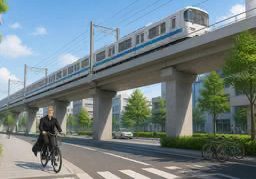
高架の下に、歩行者用の通路が設けられています。kō ka no shita ni ho kō sha yō no tsū ro ga mō ke ra re te i ma su
A pedestrian passage has been built beneath the elevated structure.
Raises a transport route above ground and carries it on a structure, which gives the word its senses of elevated track and overpass.
高架の下kō ka no shita
under an elevated structure
高架に沿って走るkō ka ni so tte hashi ru
run along an elevated track
高架線kōkasen: A railway line built above ground level on supporting structures.
高架橋kōkakyō: A bridge that carries a road or railway above ground level.
高架道路kōkadōro: A road carried above ground level on a supporting structure.
鉄道や道路を地上より高い所に通すための構造物や、その上の通路。tetsu dō ya dō ro o chi jō yo ri taka i tokoro ni tō su ta me no kō zō butsu ya so no ue no tsū ro
高架 (kōka) is a Sino-Japanese compound of 高 (kō, "high") and 架 (ka, "to span or support"), referring to something built above ground.