

JLPT · Level 163
15 words
Search Japanese words as written, in romaji or by English meaning.
Dictionaries
Quick links
Browse
 MotiSpiOfficial conversation app

Japanese word
Romajikottōhin
祖父は骨董品を集めています。so fu wa kot tō hin o atsu me te i ma su
My grandfather collects antiques.
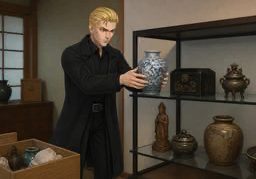
専門家がその骨董品を鑑定しました。sen mon ka ga so no kot tō hin o kan tei shi ma shi ta
A specialist appraised the antique.
Describes an old object valued as a collectible because of its age, craftsmanship, or historical character.
骨董品を鑑定するkot tō hin o kan tei su ru
appraise antiques
骨董品を集めるkot tō hin o atsu me ru
collect antiques
骨董品の価値kot tō hin no ka chi
the value of antiques
古美術品kobijutsuhin: An old object valued mainly as a work of art.
古物kobutsu: An old object treated as a used or historical item, regardless of its artistic or collectible value.
長い年月を経て、歴史的価値や美術的価値などをもつ品物。naga i toshi tsuki o he te reki shi teki ka chi ya bi jutsu teki ka chi na do o mo tsu shina mono
The word 骨董品 (kottōhin, "antique") comes from the Chinese-derived set term 骨董 (kottō, "antique or curio") plus 品 (hin, "item"); its characters are 骨 (kotsu, "bone") and 董 (tō, "to supervise").