

Japanese Conversation · Level 100
60 words
Search Japanese words as written, in romaji or by English meaning.
Dictionaries
Quick links
Browse
 MotiSpiOfficial conversation app

Japanese word
Romajikōfuku
兵士たちは敵に降伏しました。hei shi ta chi wa teki ni kō fuku shi ma shi ta
The soldiers surrendered to the enemy.
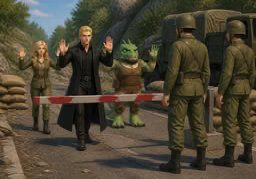
交渉の末、指揮官は部隊の降伏を発表しました。kō shō no sue shi ki kan wa bu tai no kō fuku o hap pyō shi ma shi ta
After negotiations, the commander announced the unit's surrender.
Describes giving up resistance and accepting another side's control or terms.
無条件降伏mu jō ken kō fuku
unconditional surrender
降伏を受け入れるkō fuku o u ke i re ru
accept the surrender
降伏を要求するkō fuku o yō kyū su ru
demand surrender
投降tōkō: The act of giving oneself or one's forces to an enemy or opposing authority.
降参kōsan: The act of admitting defeat and giving up resistance, often in a contest or dispute.
相手に抵抗するのをやめて従うこと。ai te ni tei kō su ru no o ya me te shitaga u ko to
降伏 (kōfuku) is a Sino-Japanese compound of 降 (kō, "descend") and 伏 (fuku, "lie prone or submit"), suggesting yielding to an opponent.