

JLPT · Level 127
15 words
Search Japanese words as written, in romaji or by English meaning.
Dictionaries
Quick links
Browse
 MotiSpiOfficial conversation app

Japanese word
Romajichōdai
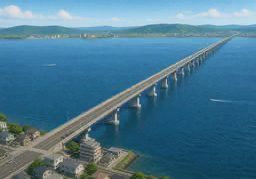
この橋は長大です。ko no hashi wa chō dai de su
This bridge is long and large.
この地域では長大なトンネルが建設されています。ko no chi iki de wa chō dai na to n ne ru ga ken setsu sa re te i ma su
A long and large tunnel is being built in this area.
Describes something whose physical length or overall scale extends far beyond the ordinary, giving it an imposing size.
長大な橋chō dai na hashi
a long and large bridge
長大な建造物chō dai na ken zō butsu
a long and large structure
長大な計画chō dai na kei kaku
a long and large plan
巨大kyodai: Describes an object or structure that is extremely large in physical dimensions.
大規模daikibo: Describes an undertaking or structure planned and carried out on a broad scale.
壮大sōdai: Describes something broad in scope and impressive in its scale.
長さや規模が普通よりもはるかに大きいさま。naga sa ya ki bo ga fu tsū yo ri mo ha ru ka ni ō ki i sa ma
The Sino-Japanese compound combines 長 (chō, "long") and 大 (dai, "large") to express great length or scale.