

JLPT · Level 52
45 words
Search Japanese words as written, in romaji or by English meaning.
Dictionaries
Quick links
Browse
 MotiSpiOfficial conversation app

Japanese word
Romajisakasama
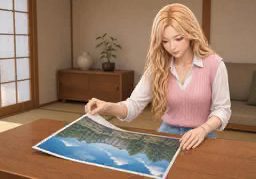
写真が逆さまです。sha shin ga saka sa ma de su
The picture is upside down.
子どもが帽子を逆さまにかぶっています。ko do mo ga bō shi o saka sa ma ni ka bu tte i ma su
The child is wearing the hat upside down.
Describes a state in which the usual top-to-bottom or front-to-back orientation is reversed.
逆さまになるsaka sa ma ni na ru
turn upside down
逆さまにするsaka sa ma ni su ru
turn upside down
逆さまに置くsaka sa ma ni o ku
place upside down
逆さsakasa: Describes a state in which the usual top and bottom are reversed.
逆向きgyakumuki: Describes something arranged to face in the direction opposite to its normal orientation.
あべこべabekobe: Describes an order or arrangement in which expected positions are reversed.
上下や前後の向きが、本来とは反対になっているさま。jō ge ya zen go no mu ki ga hon rai to wa han tai ni na tte i ru sa ma
The native Japanese word 逆さま (sakasama, "reversed state") combines 逆さ (sakasa, "reversed") with 様 (sama, "form or state").