

JLPT · Level 45
45 words
Search Japanese words as written, in romaji or by English meaning.
Dictionaries
Quick links
Browse
 MotiSpiOfficial conversation app

Japanese word
Romajihaneru
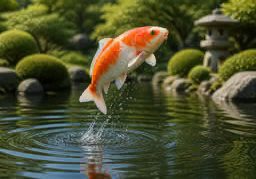
魚が水面から跳ねます。sakana ga sui men ka ra ha ne ma su
The fish jumps out of the water.
ボールが床に落ちると、大きく跳ねました。bō ru ga yuka ni o chi ru to ō ki ku ha ne ma shi ta
When the ball fell to the floor, it bounced high.
Expresses a lively motion in which something springs upward, away from a surface, or repeatedly up and down.
何度も跳ねるnan do mo ha ne ru
jump repeatedly
大きく跳ねるō ki ku ha ne ru
bounce high
跳ぶtobu: To leave the ground or another surface by pushing off with the body.
弾むhazumu: To move upward again after striking or pressing against a surface.
飛び跳ねるtobihaneru: To jump up and down repeatedly with lively movement.
人や動物が、地面や水面から勢いよく飛び上がったり、物が反動で上下に弾んだりする。hito ya dō butsu ga ji men ya sui men ka ra ikio i yo ku to bi a ga tta ri mono ga han dō de jō ge ni hazu n da ri su ru
The native Japanese verb 跳ねる (haneru, "to spring") has an uncertain older word history, and its spelling uses 跳 (chō, "leap") to represent its meaning.