

JLPT · Level 175
15 words
Search Japanese words as written, in romaji or by English meaning.
Dictionaries
Quick links
Browse
 MotiSpiOfficial conversation app

Japanese word
Romajikōhai
長く使われず、建物の荒廃が進みました。naga ku tsuka wa re zu tate mono no kō hai ga susu mi ma shi ta
The building fell further into decay after being unused for a long time.
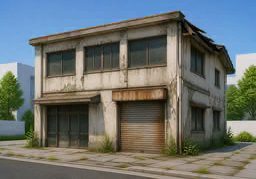
この地域では森林の荒廃を防ぐ取り組みが進められています。ko no chi iki de wa shin rin no kō hai o fuse gu to ri ku mi ga susu me ra re te i ma su
Efforts to prevent forest decay are being carried out in this area.
Describes a place or condition that loses its order, usefulness, or vitality through neglect or severe damage.
荒廃を防ぐkō hai o fuse gu
prevent decay
荒廃が進むkō hai ga susu mu
decay worsens
都市の荒廃to shi no kō hai
urban decay
衰退suitai: A gradual loss of strength, activity, size, or social importance.
荒れare: A disordered or damaged condition resulting from neglect or severe treatment.
退廃taihai: A worsening of morals, culture, or public life from a sound and orderly state.
長く放置されたり大きな損害を受けたりして、場所や状態がひどく乱れ、機能や活力を失うこと。naga ku hō chi sa re ta ri ō ki na son gai o u ke ta ri shi te ba sho ya jō tai ga hi do ku mida re ki nō ya katsu ryoku o ushina u ko to
The Sino-Japanese compound 荒廃 (kōhai) combines 荒 (kō, "wild" or "rough") and 廃 (hai, "abandoned" or "discarded"), giving the sense of a ruined state.