

Japanese Conversation · Level 99
60 words
Search Japanese words as written, in romaji or by English meaning.
Dictionaries
Quick links
Browse
 MotiSpiOfficial conversation app

Japanese word
Romajishibai
学校で芝居を見ました。gak kō de shiba i o mi ma shi ta
I watched a play at school.
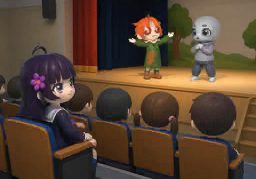
週末に家族と芝居を見に行きます。shū matsu ni ka zoku to shiba i o mi ni i ki ma su
I am going to see a play with my family this weekend.
Centers on people presenting roles and events as a staged performance.
芝居を見るshiba i o mi ru
watch a play
芝居に出るshiba i ni de ru
appear in a play
芝居をするshiba i o su ru
put on a play
演劇engeki: A theatrical work in which actors perform roles before an audience.
劇geki: A story performed on stage through dialogue, movement, and acting.
演技engi: An actor's performance of a role through speech, movement, and expression.
役者が舞台で演じる物語または演技。yaku sha ga bu tai de en ji ru monogatari ma ta wa en gi
The noun 芝居 (shibai) comes from 芝 (shiba, "grass") and 居 (i, "staying"), recalling spectators sitting on grass during early outdoor performances; its meaning then extended to the performance.