

JLPT · Level 112
30 words
Search Japanese words as written, in romaji or by English meaning.
Dictionaries
Quick links
Browse
 MotiSpiOfficial conversation app

Japanese word
Romajikonagona
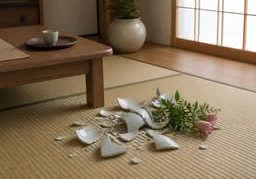
花瓶が粉々になります。ka bin ga kona gona ni na ri ma su
The vase breaks into tiny pieces.
作業員が古いコンクリートを粉々に砕きました。sa gyō in ga furu i ko n ku rī to o kona gona ni kuda ki ma shi ta
The worker crushed the old concrete into pieces.
Describes something broken into so many tiny pieces that its original shape is lost.
粉々になるkona gona ni na ru
be shattered
粉々に砕くkona gona ni kuda ku
crush into pieces
粉々に砕けるkona gona ni kuda ke ru
shatter into pieces
ばらばらbarabara: Describes something divided into separate pieces that are scattered or no longer joined.
粉微塵konamijin: Describes something reduced to very fine fragments or dust, often by force.
木っ端微塵koppamijin: Describes something destroyed into countless small pieces, often by a powerful impact.
物が非常に細かく砕けて、元の形を失った状態。mono ga hi jō ni koma ka ku kuda ke te moto no katachi o ushina tta jō tai
The Japanese word 粉々 (konagona, "shattered into tiny pieces") repeats 粉 (kona, "powder"), with voicing in the second element.