

JLPT · Level 42
60 words
Search Japanese words as written, in romaji or by English meaning.
Dictionaries
Quick links
Browse
 MotiSpiOfficial conversation app

Japanese word
Romajitsukiatari
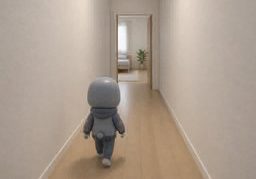
廊下の突き当たりに部屋があります。rō ka no tsu ki a ta ri ni heya ga a ri ma su
There is a room at the end of the hall.
駅を出て、突き当たりを右に曲がります。eki o de te tsu ki a ta ri o migi ni ma ga ri ma su
After leaving the station, turn right at the end.
Marks the farthest point reached along a passage, often where the passage meets a wall or another boundary.
廊下の突き当たりrō ka no tsu ki a ta ri
the end of the hall
道の突き当たりmichi no tsu ki a ta ri
the end of the road
突き当たりを右に曲がるtsu ki a ta ri o migi ni ma ga ru
turn right at the end
行き止まりikidomari: A place where a road or passage ends with no way to go farther.
端hashi: The part at the farthest limit of a space, object, or passage.
奥oku: The deepest part of a place, located farthest from its entrance.
終点shūten: The point at which a route or line of travel ends.
廊下や道などを進んだ先で、通路が終わる場所。rō ka ya michi na do o susu n da saki de tsū ro ga o wa ru ba sho
突き当たり (tsukiatari) is a noun formed from 突き当たる (tsukiataru, "to run into"), which combines 突く (tsuku, "push or strike") and 当たる (ataru, "hit or reach").