

Japanese Conversation · Level 128
60 words
Search Japanese words as written, in romaji or by English meaning.
Dictionaries
Quick links
Browse
 MotiSpiOfficial conversation app

Japanese word
Romajimonogataru
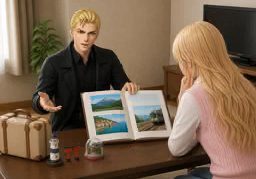
彼は旅の思い出を物語ります。kare wa tabi no omo i de o mono gata ri ma su
He recounts memories of his trip.
この古い写真は、当時の暮らしを物語ります。ko no furu i sha shin wa tō ji no ku ra shi o mono gata ri ma su
This old photograph indicates what life was like at the time.
Presents events as a connected account or serves as a sign that points to an underlying situation.
歴史を物語るreki shi o mono gata ru
reveal history
事実を物語るji jitsu o mono gata ru
reveal the facts
文化を物語るbun ka o mono gata ru
reflect a culture
語るkataru: To recount events, experiences, or ideas in a connected and often expressive way.
述べるnoberu: To state a fact, opinion, or view clearly and in an organized way.
示すshimesu: To make a fact, condition, or meaning clear through words, actions, or signs.
出来事や経験を、意味のつながりが分かるように話して伝える。de ki goto ya kei ken o i mi no tsu na ga ri ga wa ka ru yō ni hana shi te tsuta e ru
The Japanese verb 物語る (monogataru) is formed from 物 (mono, "thing") and 語る (kataru, "to tell"), with the compound meaning to tell of things or events.