

JLPT · Level 129
15 words
Search Japanese words as written, in romaji or by English meaning.
Dictionaries
Quick links
Browse
 MotiSpiOfficial conversation app

Japanese word
Romajijunkyū
朝の準急は空いています。asa no jun kyū wa a i te i ma su
The morning semi-express is not crowded.
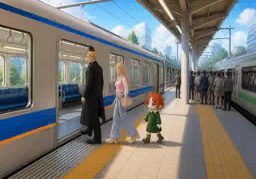
駅員に準急の乗り場を聞きます。eki in ni jun kyū no no ri ba o ki ki ma su
I ask the station staff where to board the semi-express.
Refers to a train that gains time by passing some stations but stops more often than a full express service.
準急に乗るjun kyū ni no ru
take a semi-express
準急に乗り換えるjun kyū ni no ri ka e ru
transfer to a semi-express
急行kyūkō: A train service that serves major stations and omits many intermediate stops.
快速kaisoku: A train service that gains speed by passing selected stations, with stops set by each route.
特急tokkyū: A limited express train service that skips many stations and may require an extra fare.
各駅停車kakuekiteisha: A train service that makes a stop at every station between its starting point and destination.
途中の駅を一部通過し、各駅停車より速いが急行ほど停車駅を省略しない列車。to chū no eki o ichi bu tsū ka shi kaku eki tei sha yo ri haya i ga kyū kō ho do tei sha eki o shō ryaku shi na i res sha
準急 (junkyū) is a compound of 準 (jun, "quasi") and 急 (kyū, "rapid"), so its name means a partly express service.