

JLPT · Level 171
15 words
Search Japanese words as written, in romaji or by English meaning.
Dictionaries
Quick links
Browse
 MotiSpiOfficial conversation app

Japanese word
Romajichinbotsu
船の沈没が確認されました。fune no chin botsu ga kaku nin sa re ma shi ta
The ship's sinking was confirmed.
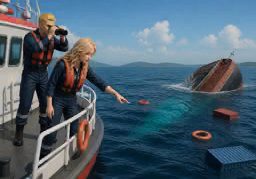
荒天のため、船の沈没を防ぐことができませんでした。kō ten no ta me fune no chin botsu o fuse gu ko to ga de ki ma se n de shi ta
Because of the stormy weather, they could not prevent the ship from sinking.
Describes a vessel or other object going down into water until it can no longer remain afloat.
船の沈没fune no chin botsu
the ship's sinking
沈没の原因chin botsu no gen in
the cause of the sinking
沈没地点chin botsu chi ten
the site of the sinking
水没suibotsu: Describes an object becoming fully covered by water, including land or buildings.
難破nanpa: Describes a vessel becoming unusable after serious damage at sea.
沈下chinka: Describes land, a structure, or another object sinking to a lower level.
船などが水中に沈むこと。fune na do ga sui chū ni shizu mu ko to
沈没 (chinbotsu, "sinking") is a Sino-Japanese compound of 沈 (chin, "sink") and 没 (botsu, "disappear beneath the surface").