

JLPT · Level 114
30 words
Search Japanese words as written, in romaji or by English meaning.
Dictionaries
Quick links
Browse
 MotiSpiOfficial conversation app

Japanese word
Romajikuchiru
長い年月の間に、木の柵が朽ちます。naga i toshi tsuki no aida ni ki no saku ga ku chi ma su
The wooden fence decays over many years.
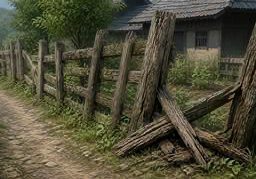
湿気の多い場所では、木材が早く朽ちます。shik ke no ō i ba sho de wa moku zai ga haya ku ku chi ma su
In damp places, wood decays quickly.
It refers to the slow deterioration of a thing as time and the elements wear down its original form.
朽ちた木ku chi ta ki
decayed wood
腐るkusaru: To decay naturally, especially in food or other organic matter.
老朽化するrōkyūkasuru: To deteriorate with age and lose usefulness, especially as a building, machine, or system.
劣化するrekkasuru: To decline in quality or performance because of age, use, or environmental effects.
傷むitamu: To become damaged or spoiled through age, use, or unfavorable conditions.
年月や風雨のために、物が腐ったり壊れたりして使えなくなる。toshi tsuki ya fū u no ta me ni mono ga kusa tta ri kowa re ta ri shi te tsuka e na ku na ru
朽ちる (kuchiru, "to decay") is a native Japanese verb connected with the classical verb 朽つ (kutsu, "to decay"); the modern form preserves the older verb's meaning.