

JLPT · Level 82
45 words
Search Japanese words as written, in romaji or by English meaning.
Dictionaries
Quick links
Browse
 MotiSpiOfficial conversation app

Japanese word
Romajibōfū
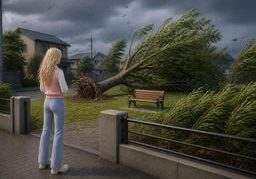
暴風で木が倒れました。bō fū de ki ga tao re ma shi ta
A storm knocked down a tree.
船は暴風を避けて港に入りました。fune wa bō fū o sa ke te minato ni hai ri ma shi ta
The ship entered the harbor to avoid the storm.
Describes wind whose force is great enough to disrupt its surroundings and cause damage.
暴風に備えるbō fū ni sona e ru
prepare for a storm
暴風警報bō fū kei hō
storm warning
嵐arashi: A storm with strong winds, often accompanied by heavy rain.
強風kyōfū: Wind that is much stronger than usual but does not always cause serious damage.
災害を引き起こすほど強く吹く風。sai gai o hi ki o ko su ho do tsuyo ku fu ku kaze
暴風 (bōfū) is a Sino-Japanese compound of 暴 (bō, "violent") and 風 (fū, "wind").