

Japanese Conversation · Level 122
60 words
Search Japanese words as written, in romaji or by English meaning.
Dictionaries
Quick links
Browse
 MotiSpiOfficial conversation app

Japanese word
Romajikojin
家族は故人を静かにしのびました。ka zoku wa ko jin o shizu ka ni shi no bi ma shi ta
The family quietly remembered the deceased.
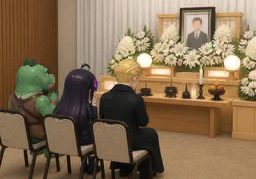
葬儀では故人の好きだった曲が流れました。sō gi de wa ko jin no su ki da tta kyoku ga naga re ma shi ta
At the funeral, a song the deceased had liked was played.
Describes someone who has died and is referred to in a formal or respectful context.
故人をしのぶko jin o shi no bu
remember the deceased
故人の遺志ko jin no i shi
the deceased's wishes
故人を悼むko jin o ita mu
mourn the deceased
死者shisha: A term for a person who has died, emphasizing the fact of death.
亡き人nakihito: A person who has died and is remembered with affection or respect.
物故者bukkosha: A person who has died, especially in formal records, announcements, or institutional contexts.
亡くなった人を、改まっていう語。na ku na tta hito o arata ma tte i u go
故 (ko, "former") combines with 人 (jin, "person") to form 故人 (kojin), a word for someone who has died.